Game Warden Career Guide 2026: Salary & Requirements
By WardenTools · Last updated 2026-08
Game wardens — also called fish and game wardens, conservation officers, or wildlife officers — are sworn law enforcement professionals who protect wildlife, enforce hunting and fishing laws, and patrol natural resources. According to the U.S. Bureau of Labor Statistics (BLS) Occupational Employment and Wage Statistics (OEWS) May 2025 release, 5,770 fish and game wardens worked nationwide earning a median annual wage of $74,060. The top 10% earned $100,980 or more. This guide compiles salary data, state-by-state requirements, and the step-by-step path to becoming a game warden in 2026.
Quick facts (BLS OEWS May 2025, SOC 33-3031):
- Median annual wage: $74,060 · Mean annual wage: $74,950 ($36.03/hour)
- National employment: 5,770 officers
- Salary range (10th–90th percentile): $50,990 – $100,980
- Highest-paying state: California at $96,130 mean annual wage
Written and maintained by the WardenTools. Salary figures compiled from BLS OEWS May 2025 data. This is career information, not professional counseling — always verify current requirements with your state wildlife agency.
What Does a Game Warden Do?
Game wardens are commissioned peace officers with full law enforcement authority whose primary jurisdiction is wildlife and natural-resource protection. According to the BLS occupational definition for SOC 33-3031, fish and game wardens "patrol assigned areas to prevent fish and game law violations" and "investigate reports of damage to crops or property by wildlife." Day-to-day duties include checking hunting and fishing licenses, investigating poaching, conducting search-and-rescue operations, and testifying in wildlife-crime cases. The BLS reports these duties span both field enforcement and biological-data collection — making the role a hybrid of law enforcement and conservation science.
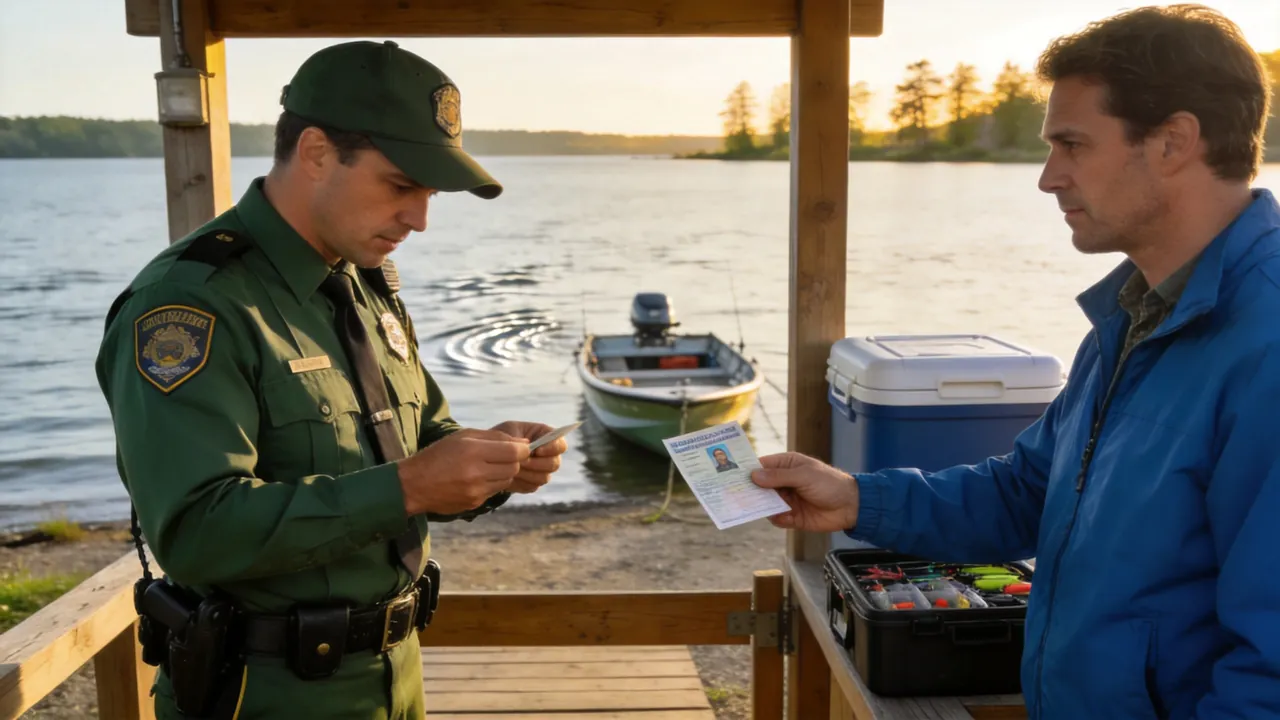
Specific duties vary by state but consistently include enforcing bag limits and seasons, investigating illegal wildlife trafficking, and partnering with federal agencies like the U.S. Fish and Wildlife Service on interstate cases. Florida alone employs 700 wardens — among the largest forces — according to BLS May 2025 data, reflecting the breadth of enforcement work required across diverse ecosystems.
Explore further: See our complete game warden salary breakdown or the how to become a game warden guide.
Game Warden Salary: What You Can Earn
Game warden pay varies widely by state, employer, and experience level. Nationally, the BLS OEWS May 2025 data shows a median of $74,060/year ($35.60/hour), but state means range from $33,440 in Florida to $96,130 in California — a gap of more than $62,000. The five highest-paying states are California ($96,130), Indiana ($91,900), Maryland ($91,150), Nevada ($90,270), and Iowa ($89,620).
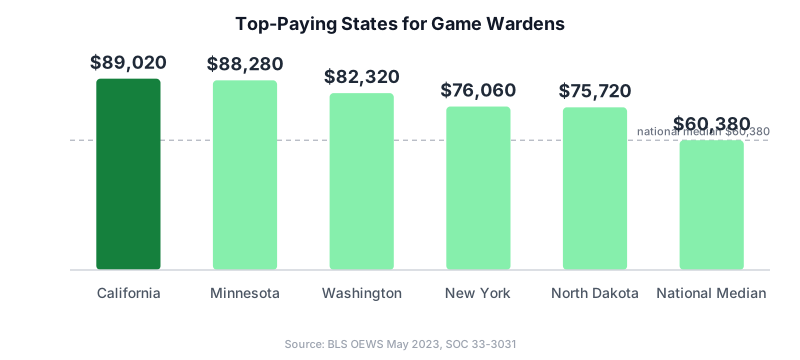
Three factors drive this range: state cost-of-living, whether the warden is state-employed or federally employed, and collective-bargaining agreements. Federal game wardens (U.S. Fish and Wildlife Service officers) are paid on the GS pay scale, typically GS-7 through GS-12 depending on experience. States with strong outdoor-recreation economies — Iowa, Indiana, and the Mountain West — tend to pay above the national median.
Compare your state: Our salary by state page ranks all 50 states plus DC, and the best states for game wardens guide weighs pay against cost of living and job availability.
Game Warden Requirements: Age, Education & Fitness
Becoming a game warden requires meeting stricter standards than most law enforcement roles because officers work independently in remote areas. Common baseline requirements across states include U.S. citizenship, a clean criminal record, a valid driver's license, and successful completion of a state-certified law enforcement academy. The minimum age is typically 21, though states like California (18), Florida (19), and Vermont (18) accept younger applicants who meet education standards.
Education requirements vary substantially. Texas and Missouri require a bachelor's degree, while California requires 60 college semester units (associate-level). Southeastern states including Florida, Louisiana, and Alabama accept a high school diploma plus military service or two years of law enforcement experience. All states require graduation from a state peace-officer academy — California's CDFW academy runs 20 weeks, New York's residential basic school runs 26 weeks.
See full requirements: Our game warden requirements guide details age, education, physical-fitness, background-check, and residency rules for all 50 states.
Education & Degree Paths
Most aspiring game wardens benefit from a degree in criminal justice, wildlife management, biology, or environmental science, even where not strictly required. A relevant degree strengthens applications and accelerates promotion. For example, Texas Parks and Wildlife requires a bachelor's degree in any field, but candidates with natural-resource or law-enforcement coursework are preferred. Regionally accredited universities including the University of Alaska Fairbanks and Oregon State University offer online criminal justice and conservation-law programs tailored to wildlife officers.
For those seeking a degree, the most relevant programs are Bachelor of Science in Criminal Justice (with law-enforcement concentration), Wildlife and Fisheries Science, and **Natural Resource Management). Accredited online programs from schools like the University of Alaska Fairbanks and Oregon State University serve working students.
Find a program: Our game warden degree guide lists accredited criminal justice and wildlife-management programs, including online options.
Academy & Training
Every state game warden must complete a state-certified peace-officer academy plus agency-specific wildlife training. The combined training typically runs 6 to 12 months and covers criminal law, firearms, defensive tactics, wildlife identification, boat operation, and search-and-rescue. Pennsylvania's Ross Leffler School of Conservation — the oldest game-warden academy in the U.S., founded in 1932 — exemplifies the dual law-enforcement and conservation curriculum.
Notable academies include the California Department of Fish and Wildlife Academy (28 weeks total), the New York Basic School for Environmental Conservation Officers (26-week residential), and the Texas Game Warden Training Academy (17-week residential at TPWD). Federal officers train at the Federal Law Enforcement Training Center (FLETC) in Glynco, Georgia.
Compare academies: See our game warden academy guide for state-by-state training timelines and academy contacts.
How to Become a Game Warden
The path to becoming a game warden follows five core steps, though exact requirements differ by state. The national job market is competitive — with only 5,770 positions nationwide per BLS May 2025 data, applicants should expect a rigorous multi-stage hiring process that can take 6–12 months from application to academy start.
- Meet baseline requirements — Confirm U.S. citizenship, age, education, and a clean background for your target state.
- Earn relevant education or experience — Pursue a degree in criminal justice or wildlife science, or gain military/LE experience.
- Pass the civil-service exam and physical test — Most states require a written exam, physical agility test, and psychological evaluation.
- Complete the academy — Graduate from your state's peace-officer academy plus the wildlife-agency training program.
- Field training and sworn commission — Complete a supervised field-training period before receiving full warden commission.
Full walkthrough: Our how to become a game warden guide details each step with state-specific variations and a preparation timeline.
Frequently Asked Questions
How much does a game warden make? The national median is $74,060/year ($35.60/hour) as of BLS OEWS May 2025. The 10th percentile earns $50,990 and the 90th percentile earns $100,980. State means range from $33,440 (Florida) to $96,130 (California).
What degree do you need to be a game warden? Requirements vary. Texas and Missouri require a bachelor's degree; California requires 60 college semester units; states including Florida, Louisiana, Alabama, Iowa, and North Carolina accept a high school diploma plus military or LE experience. A degree in criminal justice or wildlife biology strengthens any application. See our degree guide.
How long does it take to become a game warden? From application to sworn commission typically takes 1 to 2 years, including the hiring process (3–6 months), the academy (6–7 months), and field training (3–6 months).
Is a game warden a dangerous job? Game wardens work alone in remote areas and encounter armed individuals during hunting-season enforcement. The role carries inherent risk, but proper training, ballistic vests, and backup protocols mitigate it. BLS classifies the occupation under protective service.
What's the difference between a game warden and a conservation officer? The titles are largely interchangeable. "Game warden" is traditional in the eastern and southern U.S.; "conservation officer" is common in the Midwest and West. The BLS occupational code 33-3031 covers both.
Sources
- U.S. Bureau of Labor Statistics, Occupational Employment and Wage Statistics, May 2025 — Fish and Game Wardens (SOC 33-3031): https://www.bls.gov/oes/current/oes333031.htm
- BLS data copyright and attribution policy: https://www.bls.gov/bls/copyright.htm
- State wildlife agency career pages (linked individually on each state page)
Last updated June 2026. Salary data reflects BLS OEWS May 2025 release, the most recent national release at time of publication. Disclaimer: This site provides career information only and is not affiliated with any state wildlife agency or the federal government. Verify all requirements and salary figures with your state's wildlife agency before applying.