Resource
Game Warden Academy & Training Guide 2026
By WardenTools Research Team · Last updated 2026-06
Every game warden must graduate from a state-certified peace-officer academy plus an agency-specific wildlife training program. Combined, this training typically runs 6 to 12 months and is residential (cadets live on-site) in most states. This guide covers what academy training includes, the major state academies and their durations, and how to prepare. Academy graduation is non-negotiable — without it, you cannot be commissioned as a sworn game warden.
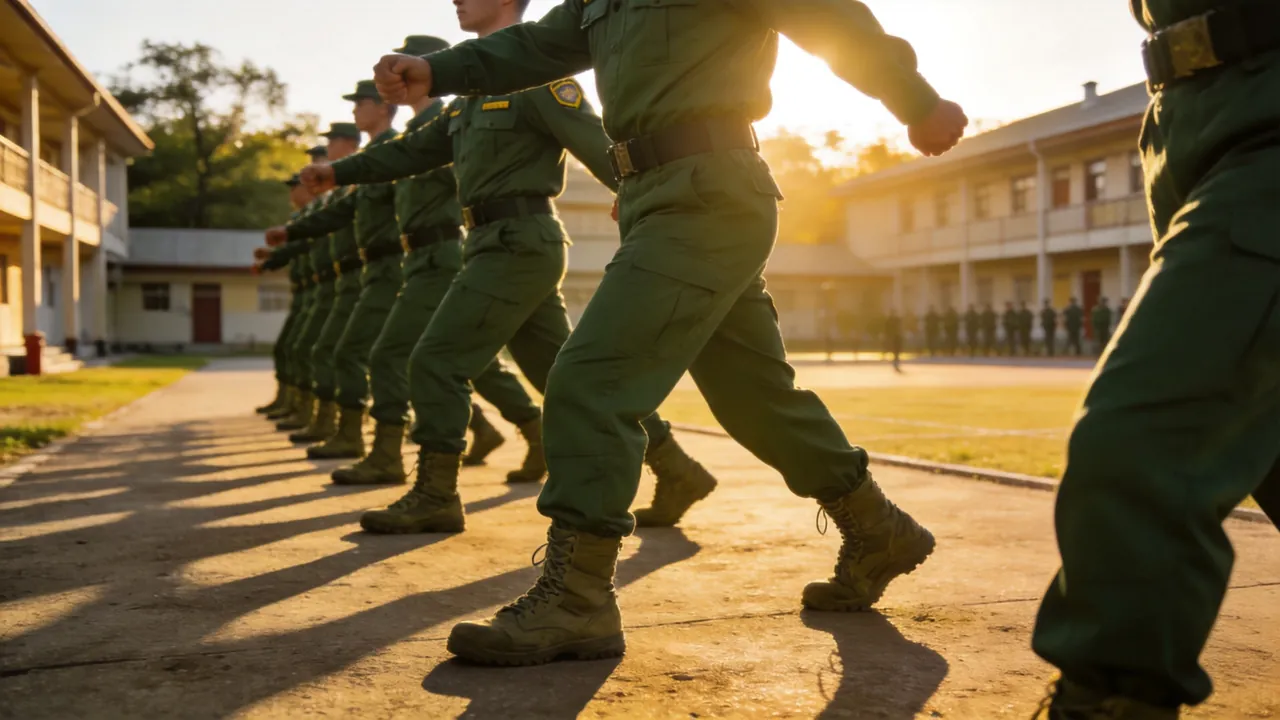
Researched by the WardenTools Research Team from state wildlife agency and peace-officer-standards sources. Academy durations and curricula change — verify current details with your state agency.
What Game Warden Academy Training Includes
Academy training combines two segments: a state-certified basic police academy (general peace-officer certification) and an agency-specific wildlife academy (conservation and wildlife-law specialization). Most states run these sequentially. The curriculum spans:
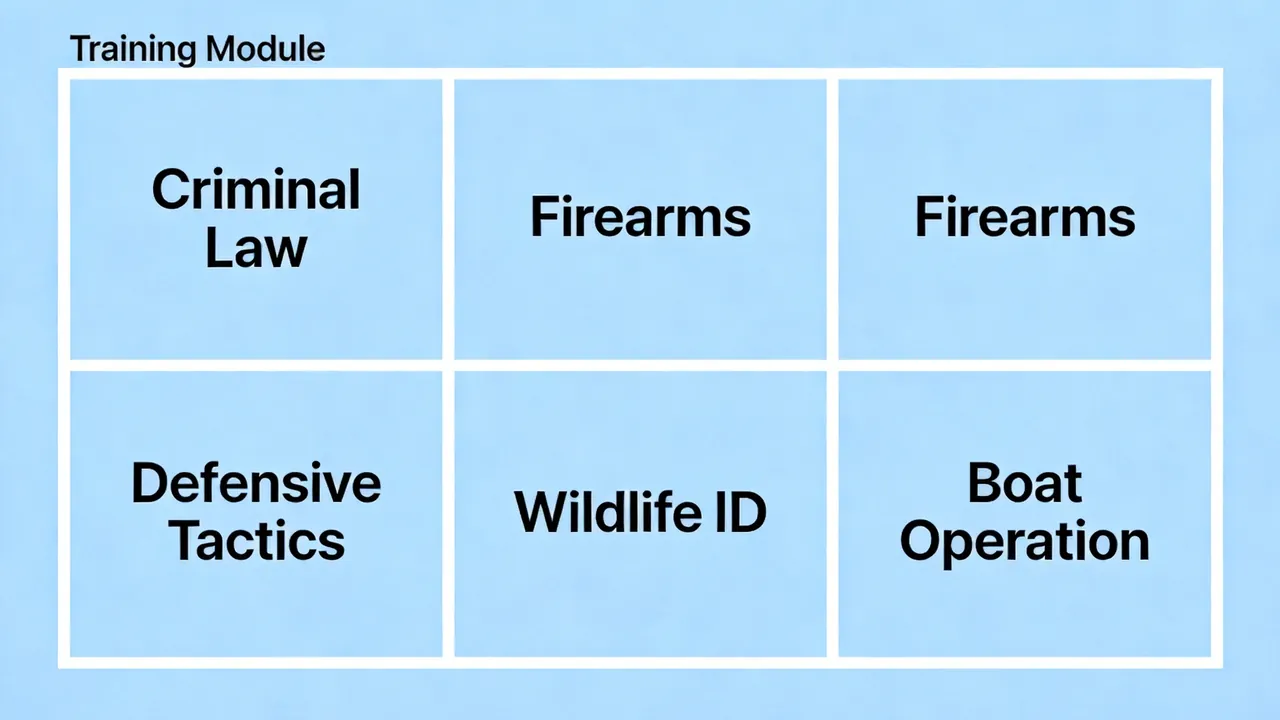
- Criminal and constitutional law — probable cause, arrest procedure, search-and-seizure, use-of-force law
- Firearms training — handgun and long-gun qualification, judgmental shooting, force-on-force scenarios
- Defensive tactics — arrest control, handcuffing, ground control, less-lethal weapons
- Emergency vehicle operation — pursuit driving, off-road vehicle operation
- Wildlife identification — species ID, sex and age determination, evidence handling for wildlife crimes
- Boat and water operations — vessel handling, waterborne patrol, swiftwater rescue
- Search and rescue — tracking, wilderness survival, incident command
- Report writing and courtroom testimony — documentation, evidence chain-of-custody, trial preparation
Academy training is physically and academically demanding. Cadets who arrive out of shape or unfamiliar with basic legal concepts are at high risk of washout. Successful candidates typically train for the physical test 3–6 months before academy start and review their state's wildlife laws in advance.
See the path: Our how to become a game warden guide shows where the academy fits in the full career timeline.
Major State Game Warden Academies
Academy structure and duration vary significantly. The table below lists major state academies, their durations, and whether they are residential:
| State agency | Academy | Total duration | Residential? |
|---|---|---|---|
| California DFW | CDFW Wildlife Officer Academy | 28 weeks (20 basic + 8 agency) | Yes |
| New York DEC | Basic School for Environmental Conservation Officers | 26 weeks | Yes |
| Texas Parks and Wildlife | TPWD Game Warden Training Academy | 17 weeks | Yes |
| Pennsylvania Game Commission | Ross Leffler School of Conservation | ~24 weeks | Yes |
| Maine IF&W | Maine Criminal Justice Academy + Warden Service training | ~20 weeks | Yes |
| Federal USFWS | Federal Law Enforcement Training Center (FLETC), Glynco GA | ~18 weeks basic + agency | Yes |
Pennsylvania's Ross Leffler School of Conservation, founded in 1932, is the oldest game-warden training school in the United States and set the template for combining police certification with wildlife specialization. California's 28-week CDFW academy is among the longest, reflecting the state's extensive coastline, diverse ecosystems, and complex wildlife-law enforcement workload.
Find your state's academy: Each state page at /state/[state]/ lists the specific academy and its requirements — for example, California academy or Texas academy.
The Two-Academy Model Explained
Most states split game warden training into two phases. Understanding this structure helps you plan your timeline:
Phase 1 — State basic police academy (certification): This is the same academy any police officer in the state attends. It confers state peace-officer (POST) certification. Duration is typically 16–26 weeks. Curriculum is general law enforcement: criminal law, firearms, defensive tactics, driving, report writing.
Phase 2 — Agency wildlife academy (specialization): After basic certification, cadets attend the wildlife agency's own training, focused on wildlife law, species identification, boat operation, search-and-rescue, and agency policy. Duration is typically 6–12 weeks. Some states (like California) integrate both into a single continuous 28-week residential program; others (like New York) run them as distinct phases.
A few states — notably Oregon — handle wildlife enforcement through the State Police rather than a separate wildlife agency, meaning Oregon fish and wildlife troopers complete the standard state police academy with a wildlife specialization track.
How to Prepare for the Academy
Academy washout rates are significant — often 10–20% — and most washouts stem from physical unfitness or academic failure. Targeted preparation in the months before academy start substantially improves graduation odds:
- Physical conditioning (start 3–6 months out). Train specifically for the test events: 1.5-mile run, push-ups, sit-ups, and a swim. California's 500-yard continuous swim is a frequent failure point — practice it weekly.
- Study your state's wildlife laws. Obtain the current hunting and fishing regulations digest and review seasons, bag limits, and license requirements. This material appears on academy exams.
- Boating and swimming skills. If your state has extensive waterways, build swim endurance and basic boat-handling familiarity.
- Firearms familiarity. While the academy teaches marksmanship, prior safe handling experience reduces stress during qualification.
- Financial and family preparation. Residential academies are full-time — cadets typically cannot hold outside employment. Plan finances accordingly.
Related: Our requirements guide details the physical fitness standards you must pass to enter the academy.
Field Training After the Academy
Academy graduation confers peace-officer certification but does not immediately result in independent patrol. New wardens enter a field-training program — typically 3 to 6 months — patrolling alongside an experienced training officer. During this phase, the new warden's reports, enforcement decisions, and judgment are evaluated against standardized benchmarks. Only after successful field training does the warden receive a full sworn commission and independent duty assignment.
Field training is where academy knowledge becomes practical skill. Training officers assess not just enforcement competence but decision-making under pressure, communication with the public, and adaptability in remote conditions. Performance reviews during field training can affect initial duty assignment — strong performers may receive preference for preferred districts.
Frequently Asked Questions
How long is game warden academy? Total training runs 6 to 12 months, combining a basic police academy (16–26 weeks) with an agency wildlife academy (6–12 weeks). California (28 weeks) and New York (26 weeks) are among the longest single programs.
Is game warden academy residential? In most states, yes — cadets live on-site at the academy for the duration. Texas, California, New York, Pennsylvania, and Maine all run residential academies. This means cadets cannot hold outside employment.
Do you get paid during the academy? Yes — in most states, cadets are paid employees (often at a trainee salary) while attending the academy. Federal USFWS trainees are paid on the GS scale. Confirm pay status with your agency.
What happens if you fail the academy? Policies vary. Some agencies allow one re-attempt; others dismiss. Physical-fitness and firearms failures are the most common reasons for washout, which is why pre-academy preparation matters.
Can prior police or military training shorten the academy? Often yes. Many states grant a partial waiver of the basic police academy for prior POST certification or military police experience, though the agency wildlife-academy portion is still required. Federal service may credit military time toward retirement but does not waive FLETC.
Sources
- California Department of Fish and Wildlife, Wildlife Officer Academy: https://wildlife.ca.gov/Enforcement
- New York State DEC, Basic School for ECOs: https://www.dec.ny.gov
- Texas Parks and Wildlife, Game Warden Academy: https://tpwd.texas.gov/careers
- Pennsylvania Game Commission, Ross Leffler School of Conservation: https://www.pgc.pa.gov
- Federal Law Enforcement Training Center (FLETC): https://www.fletc.gov
- BLS OEWS May 2023, Fish and Game Wardens (SOC 33-3031): https://www.bls.gov/oes/2023/may/oes333031.htm
Last updated June 2026. Disclaimer: Academy durations and curricula are compiled from public agency sources and change over time. This is not legal or career-counseling advice. Verify current academy details with your state wildlife agency before applying.