Resource
Game Warden Degree & Education Guide 2026
By WardenTools Research Team · Last updated 2026-06
While not every state requires a college degree to become a game warden, the right degree substantially strengthens your application and accelerates career progression. Texas and Missouri require a bachelor's degree outright; California requires 60 college semester units; and the federal U.S. Fish and Wildlife Service requires a bachelor's with biology coursework. This guide covers the best majors for aspiring game wardens, accredited online and on-campus programs, and how to choose a degree that maximizes your competitiveness.
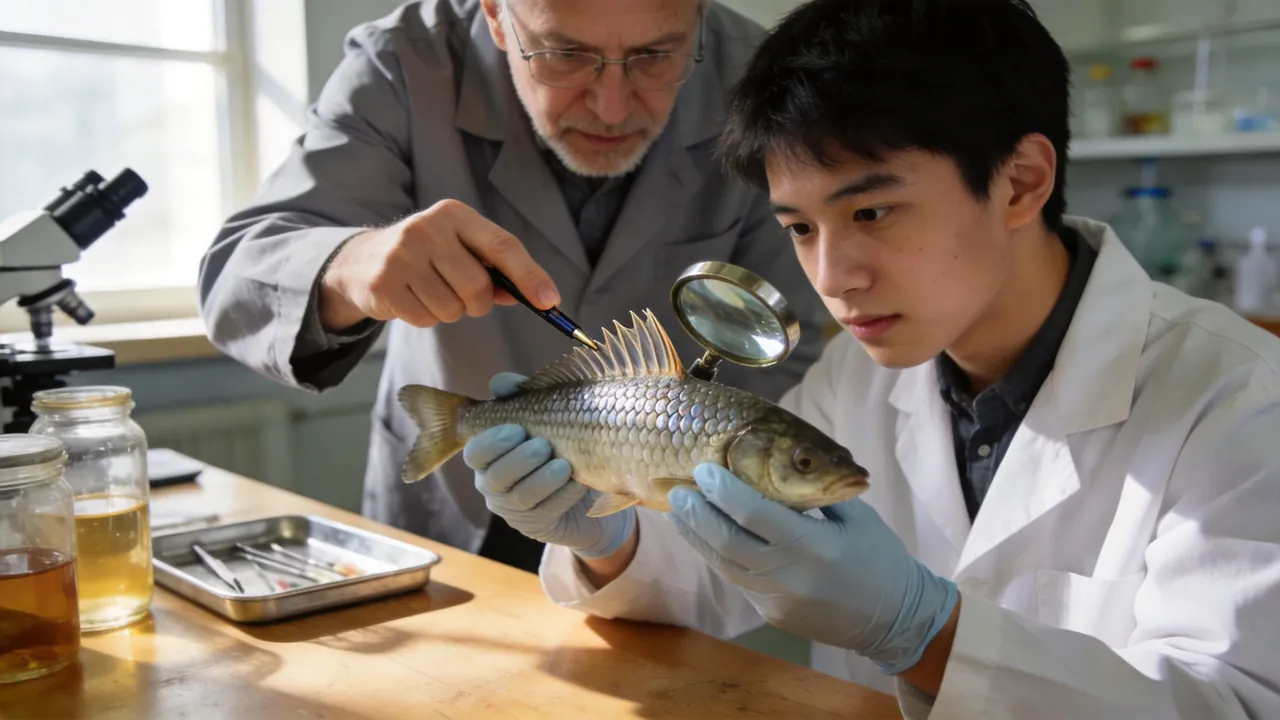
Researched by the WardenTools Research Team. Program listings reference accredited institutions; always verify admission requirements and tuition directly with each school. Some programs below may offer affiliate-supported enrollment referrals.
Do You Need a Degree to Be a Game Warden?
The short answer: it depends on your state, but a degree always helps. State education requirements fall into three tiers:
- Bachelor's required: Texas Parks and Wildlife, Missouri Department of Conservation, and federal U.S. Fish and Wildlife Service positions.
- Associate-level (60 credits) required: California Department of Fish and Wildlife.
- High school + experience accepted: Florida, Louisiana, Alabama, and many southeastern/midwestern states — but a degree is strongly preferred and often required for promotion beyond entry level.
Even where a degree is not strictly required, graduates are hired at substantially higher rates. Wildlife agencies view relevant coursework as evidence of commitment to the field and as preparation for the biological and legal knowledge the job demands. If you are deciding whether to invest in a degree before applying, the answer is almost always yes — especially in competitive states like New York (390 officers) or California (280 officers).
Related: See our game warden requirements guide for the full state-by-state education breakdown.
Best Majors for Game Wardens
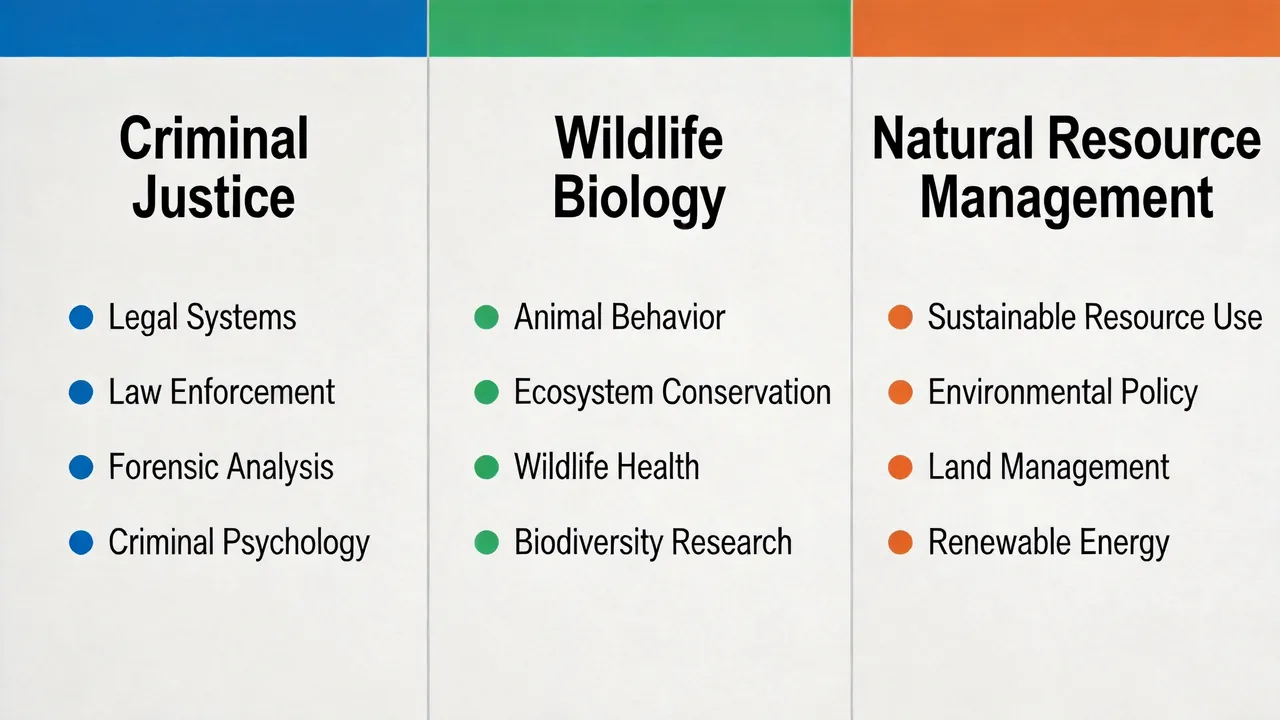
Three degree paths dominate game warden hiring, each signaling different strengths to agencies:
1. Criminal Justice (most common for the law-enforcement side)
A Bachelor of Science in Criminal Justice covers law enforcement procedure, criminal law, constitutional law, and investigation. This major directly prepares you for the academy's legal curriculum and signals commitment to sworn-officer work. It is the most flexible choice — graduates can pivot to municipal policing, federal LE, or conservation work.
2. Wildlife Biology / Fisheries Science (strongest for the conservation side)
A Bachelor of Science in Wildlife and Fisheries Science or Biology covers ecology, wildlife management, population dynamics, and habitat conservation. This major is highly valued because game wardens must identify species, understand bag-limit biology, and investigate wildlife crimes. The federal U.S. Fish and Wildlife Service specifically requires biology coursework.
3. Natural Resource Management / Environmental Science
A Bachelor of Science in Natural Resource Management or Environmental Science blends policy, conservation, and field skills. Graduates understand the regulatory framework around public lands, water rights, and environmental law — knowledge that distinguishes candidates in oral interviews.
Which should you choose? If you are equally drawn to law enforcement and conservation, Criminal Justice with a minor in Wildlife Biology is the strongest hybrid. If your long-term goal includes federal service or specialized wildlife-investigation work, Wildlife Biology is the better choice.
Accredited Online Programs for Working Students
For applicants already working or balancing family commitments, accredited online programs offer a path to the required degree. Programs below are regionally accredited (the accreditation standard all state agencies recognize):
- B.S. in Criminal Justice (online) — Offered by many regionally accredited state universities. Look for programs with a law-enforcement concentration and courses in wildlife law or environmental regulation.
- B.S. in Wildlife and Fisheries Science — Fewer fully-online options because of required field labs, but hybrid programs exist (e.g., Oregon State University offers online biology coursework with field-intensive summer sessions).
- B.S. in Environmental Science (online) — Widely available from accredited universities; pairs well with conservation-officer career goals.
Selection criteria: Confirm the program is regionally accredited (not just nationally accredited), offers coursework relevant to wildlife law, and has a workable field-component schedule. Tuition at public state universities (in-state) typically runs $10,000–$15,000/year; private and out-of-state programs cost more.
Some programs listed may be affiliated — if you enroll through a referral link on this site, we may receive compensation. This does not affect our editorial assessment.
Recommended On-Campus Programs
For students seeking the traditional residential experience, several universities have strong reputations for placing graduates into wildlife-law-enforcement careers:
- University of Alaska Fairbanks — B.S. in Fisheries and Ocean Sciences; strong pipeline to Alaska State Troopers wildlife division.
- Oregon State University — B.S. in Fisheries and Wildlife Science; field-intensive with strong agency relationships.
- University of Wisconsin–Stevens Point — B.S. in Wildlife Ecology; long-standing reputation in Midwest conservation careers.
- Humboldt State University (Cal Poly Humboldt) — B.S. in Wildlife; popular feeder for California Department of Fish and Wildlife.
- Texas A&M University — B.S. in Wildlife and Fisheries Sciences; feeds Texas Parks and Wildlife.
These programs combine rigorous science coursework with field labs, internships, and agency networking that substantially improve hiring outcomes. Confirm current admission requirements and tuition directly with each institution.
How a Degree Affects Your Hiring Chances
A relevant degree improves hiring outcomes in three measurable ways:
- Higher hire rate. Agencies with competitive applicant pools (California, New York, federal) use education as a screening filter. A degree moves you past the first cut.
- Faster promotion. Most state civil-service ladders award education points. A bachelor's degree can shorten the time to sergeant or lieutenant by 1–3 years.
- Federal eligibility. The U.S. Fish and Wildlife Service requires a bachelor's with biology coursework. No degree = no federal path.
The BLS reports a national median wage of $60,380 for fish and game wardens (OEWS May 2023), with the 75th–90th percentile ($72,900–$86,880) largely reflecting degreed, senior officers. The degree's return on investment is strongest in high-paying states like California ($89,020 mean) and Minnesota ($88,280 mean).
Frequently Asked Questions
What degree is best for a game warden? The three strongest majors are Criminal Justice, Wildlife Biology, and Natural Resource Management. Criminal Justice is the most flexible; Wildlife Biology is strongest for federal and specialized roles.
Can I become a game warden with an online degree? Yes, if the program is regionally accredited (the standard all state agencies recognize). Verify accreditation status and any state-specific preferences with your target agency.
Does the federal government require a degree? Yes. The U.S. Fish and Wildlife Service requires a bachelor's degree with coursework in biology or a closely related field.
Is a master's degree worth it for a game warden? Generally no for entry-level field work — a bachelor's is sufficient. A master's in wildlife biology or public administration can help with specialized investigative or management roles later in a career.
Will any major work if the state doesn't require a specific one? Texas and Missouri accept any bachelor's major, but natural-science or criminal-justice coursework is preferred. A generic major with no relevant coursework puts you at a disadvantage against applicants with targeted degrees.
Sources
- U.S. Bureau of Labor Statistics, OEWS May 2023, Fish and Game Wardens (SOC 33-3031): https://www.bls.gov/oes/2023/may/oes333031.htm
- U.S. Fish and Wildlife Service, Special Agent qualifications: https://www.fws.gov/le
- Texas Parks and Wildlife, Game Warden cadet requirements: https://tpwd.texas.gov/careers
- California Department of Fish and Wildlife, Wildlife Officer education: https://wildlife.ca.gov/Enforcement
- Regional accreditation database (U.S. Department of Education): https://ed.gov/accreditation
Last updated June 2026. Affiliate disclosure: Some program referrals on this page may be affiliate links — we may earn compensation if you enroll through them, at no additional cost to you. Disclaimer: This is educational information, not an endorsement of any specific institution. Verify accreditation, admission requirements, and tuition directly with each school before enrolling.