Resource
Game Warden Salary 2026: National & State Pay
By WardenTools Research Team · Last updated 2026-06
Game wardens earn a median annual wage of $60,380 ($29.03/hour), according to the U.S. Bureau of Labor Statistics (BLS) Occupational Employment and Wage Statistics (OEWS) May 2023 release for SOC 33-3031 (Fish and Game Wardens). But pay varies dramatically by state — from $31,010 in Florida to $89,020 in California, a spread of more than $58,000. This guide breaks down national percentiles, the highest-paying states, the highest-employment states, and the factors behind game warden pay.
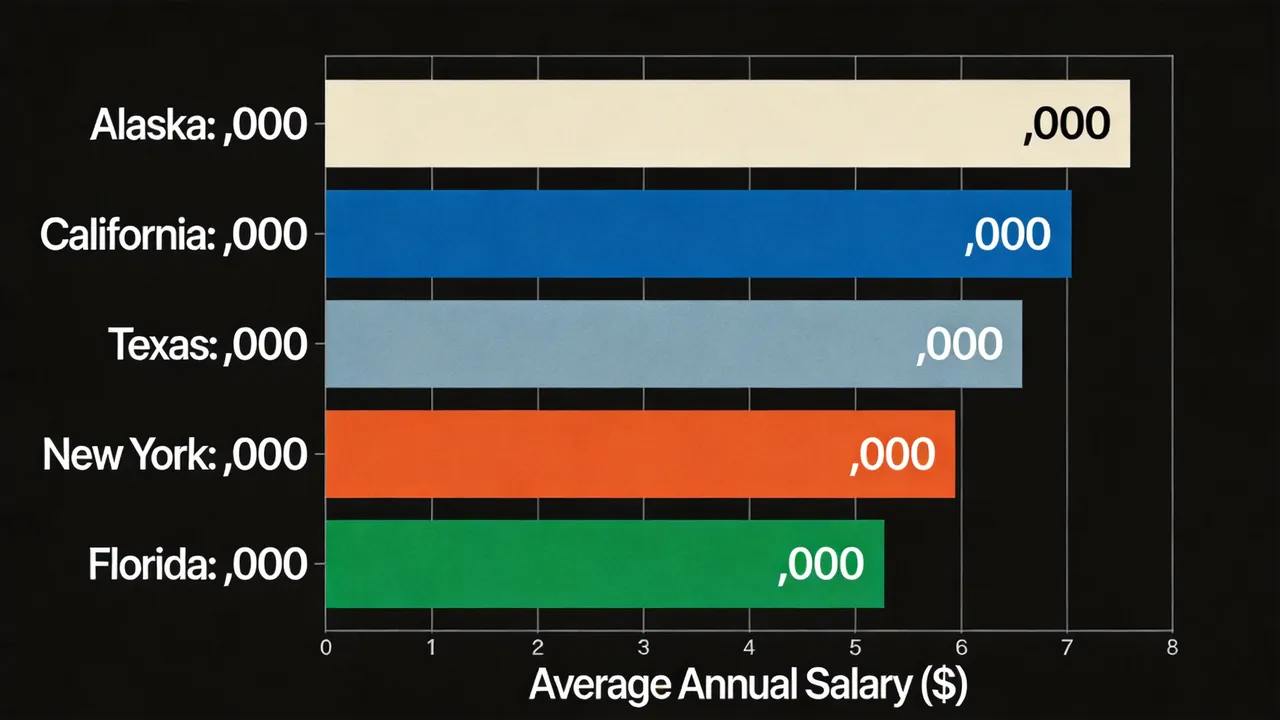
Salary data compiled by the WardenTools Research Team from BLS OEWS May 2023. All figures cite SOC 33-3031. This is informational only — verify current pay with your state wildlife agency.
National Game Warden Salary (BLS OEWS May 2023)
The BLS tracks fish and game wardens under Standard Occupational Classification (SOC) code 33-3031. The May 2023 OEWS release — the most recent national data at time of publication — reports the following national figures:
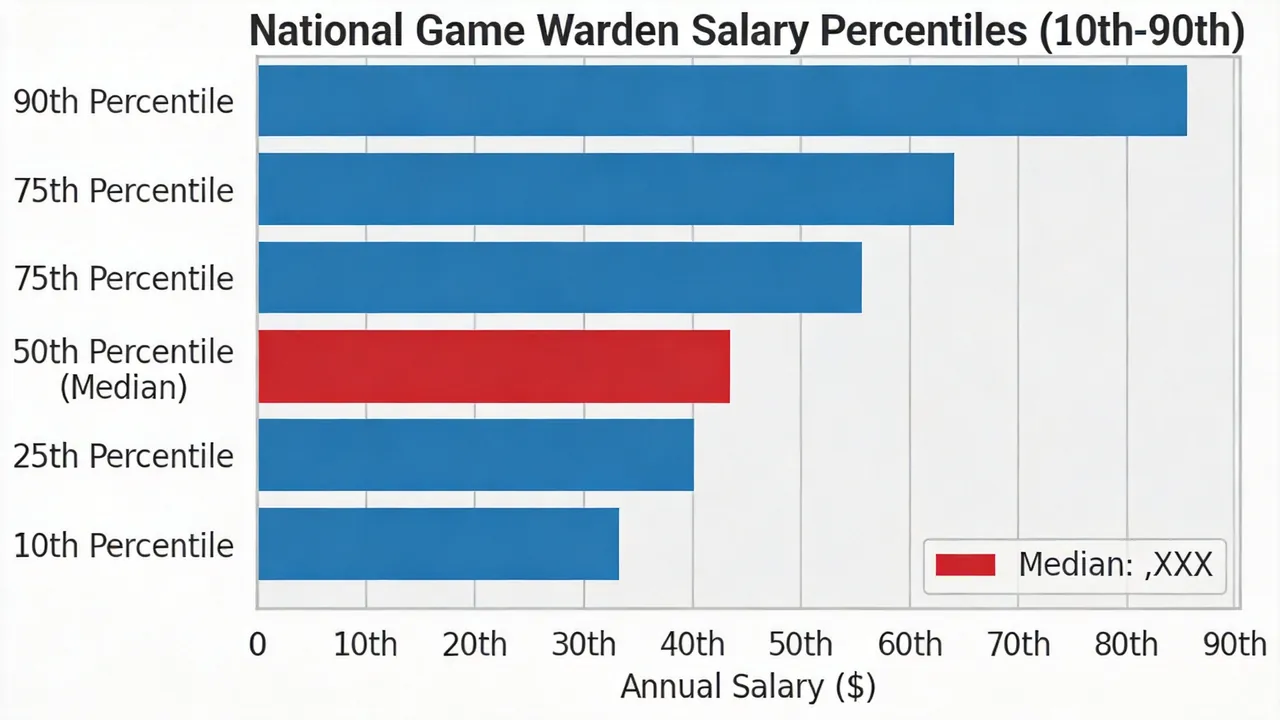
National wage percentiles (May 2023):
| Percentile | Hourly | Annual |
|---|---|---|
| 10th | $15.99 | $33,260 |
| 25th | $23.20 | $48,250 |
| Median (50th) | $29.03 | $60,380 |
| 75th | $35.05 | $72,900 |
| 90th | $41.77 | $86,880 |
- Mean (average) wage: $61,120/year ($29.38/hour)
- Total national employment: 6,290 officers
The gap between the 10th percentile ($33,260) and the 90th percentile ($86,880) — a $53,620 range — reflects differences in state pay scales, experience, rank, and federal-versus-state employment. New entry-level wardens in lower-paying southeastern states cluster near the 10th–25th percentiles, while senior officers in high-paying states and federal GS-11+ employees approach the 75th–90th percentiles.
See state-by-state: Our salary by state page ranks all 50 states + DC with employment counts.
Highest-Paying States for Game Wardens
Geography is the single largest driver of game warden pay. The five highest-paying states by mean annual wage (BLS OEWS May 2023) are:
| Rank | State | Mean annual | Mean hourly |
|---|---|---|---|
| 1 | California | $89,020 | $42.80 |
| 2 | Minnesota | $88,280 | $42.44 |
| 3 | Washington | $82,320 | $39.58 |
| 4 | New York | $76,060 | $36.57 |
| 5 | North Dakota | $75,720 | $36.40 |
All five exceed the national median by at least $15,000/year. California's $89,020 mean is $28,640 above the national median — a 47% premium. However, high pay often correlates with high cost of living (California, Washington, New York) or remote-duty hardship pay (North Dakota, Minnesota). Our best states for game wardens guide adjusts pay for cost of living to show true purchasing power.
Explore a state: Each state has a dedicated salary page at /state/[state]/ — for example, California game warden salary or New York game warden salary.
States With the Most Game Warden Jobs
Pay is only half the picture — job availability matters too. The BLS reports total national employment of 6,290 fish and game wardens, concentrated heavily in a few states. The five states with the highest employment (May 2023):
| Rank | State | Employment | Mean annual |
|---|---|---|---|
| 1 | Florida | 700 | $31,010 |
| 2 | New York | 390 | $76,060 |
| 3 | Tennessee | 370 | $72,200 |
| 4 | California | 280 | $89,020 |
| 5 | Arizona | 260 | $48,260 |
Florida leads in sheer job count (700 officers) but has the lowest mean pay among major states ($31,010), while California combines high employment (280) with the highest pay ($89,020). New York is notable for balancing both — 390 jobs at $76,060. Tennessee's 370 officers represent a location quotient of 2.74, meaning game warden jobs are nearly 3× more concentrated there than the national average.
Job-concentration leaders: South Dakota (LQ 6.31), Maine (5.85), and Michigan's Upper Peninsula (LQ 22.6) have the highest game-warden jobs per capita, reflecting their large rural outdoor-recreation economies.
Factors That Affect Game Warden Pay
Beyond state geography, four factors materially shift a warden's earnings:
State vs. federal employment. State wildlife agencies set their own pay scales (often via civil-service bands or collective bargaining). Federal U.S. Fish and Wildlife Service officers are paid on the General Schedule (GS), typically GS-7 (entry) through GS-12 (senior), with locality adjustments. Federal base pay often exceeds state pay in low-wage states.
Experience and rank. Career progression follows civil-service ladders: warden → senior warden → sergeant → lieutenant. The BLS 75th percentile ($72,900) and 90th percentile ($86,880) largely reflect supervisory and specialized officers.
Cost of living. A $60,000 salary stretches much further in Mississippi than in California. Our best states guide ranks states by pay adjusted for regional price parity (RPP).
Overtime and special duty. Wardens working hunting-season overtime, marine patrol, or wildfire/disaster response can add $5,000–$15,000/year in overtime and hazard pay.
Federal vs. State Game Warden Pay
Federal game wardens — U.S. Fish and Wildlife Service Office of Law Enforcement officers — are paid on the GS scale. As of the 2024 GS pay table, a GS-7 step 1 in the "rest of U.S." locality earns $48,976, while a GS-12 step 10 earns $108,017. Federal positions typically require a bachelor's degree and offer higher base pay than many state agencies, but fewer openings and a national mobility requirement.
State agency pay, by contrast, is set locally and ranges widely. The highest-paying state (California, $89,020) exceeds most federal GS bands, while the lowest-paying major state (Florida, $31,010) falls well below entry-level federal pay. Candidates weighing both paths should consider: federal jobs offer pension and mobility; state jobs offer geographic stability and stronger local community ties.
Frequently Asked Questions
What is the starting salary for a game warden? Entry-level wardens typically earn near the BLS 10th–25th percentile ($33,260–$48,250 nationally), varying by state. Florida entry pay is around $31,000–$36,000; California entry pay starts above $60,000.
Do game wardens get paid overtime? Yes. Most state wildlife agencies pay overtime under the Fair Labor Standards Act. Wardens working hunting-season enforcement, marine patrol, or disaster response can earn substantial overtime — often $5,000–$15,000/year.
Which state pays game wardens the most? California at a $89,020 mean annual wage (BLS May 2023), followed by Minnesota ($88,280) and Washington ($82,320).
Are game wardens paid more than police officers? Generally no — police officers in major metros often earn more due to hazard pay and overtime. But in rural states, game wardens can out-earn local deputies. National median police pay ($77,270, BLS May 2023) exceeds the game warden median ($60,380).
Does the federal government hire game wardens? Yes — the U.S. Fish and Wildlife Service Office of Law Enforcement and the National Park Service both employ federal wildlife officers, paid on the GS scale (typically GS-7 to GS-12).
Sources
- U.S. Bureau of Labor Statistics, OEWS May 2023, Fish and Game Wardens (SOC 33-3031): https://www.bls.gov/oes/2023/may/oes333031.htm
- BLS OEWS state data: https://www.bls.gov/oes/2023/may/333031sw.htm
- BLS copyright/attribution policy: https://www.bls.gov/bls/copyright.htm
- U.S. Office of Personnel Management, GS pay tables: https://www.opm.gov/policy-data-oversight/pay-leave/pay-systems/general-schedule/
Last updated June 2026. Salary data reflects BLS OEWS May 2023 release. Disclaimer: Pay figures are compiled from public BLS data for informational purposes and do not represent a guarantee of future earnings. Verify current salary ranges with your state wildlife agency or the U.S. Office of Personnel Management.